Ghana’s Automotive Development Policy: Impact on Auto Industry
- supercars.test
- April 12, 2023
The Government of Ghana launched a comprehensive policy to revamp the fortunes of the auto industry. For decades the country has relied on imported cars, many of which were old or at the end of their lifespans. With the new auto policy, however, the country intends to build a strong auto industry that will serve the rest of West Africa.
What is the Ghana Automotive Development Policy?
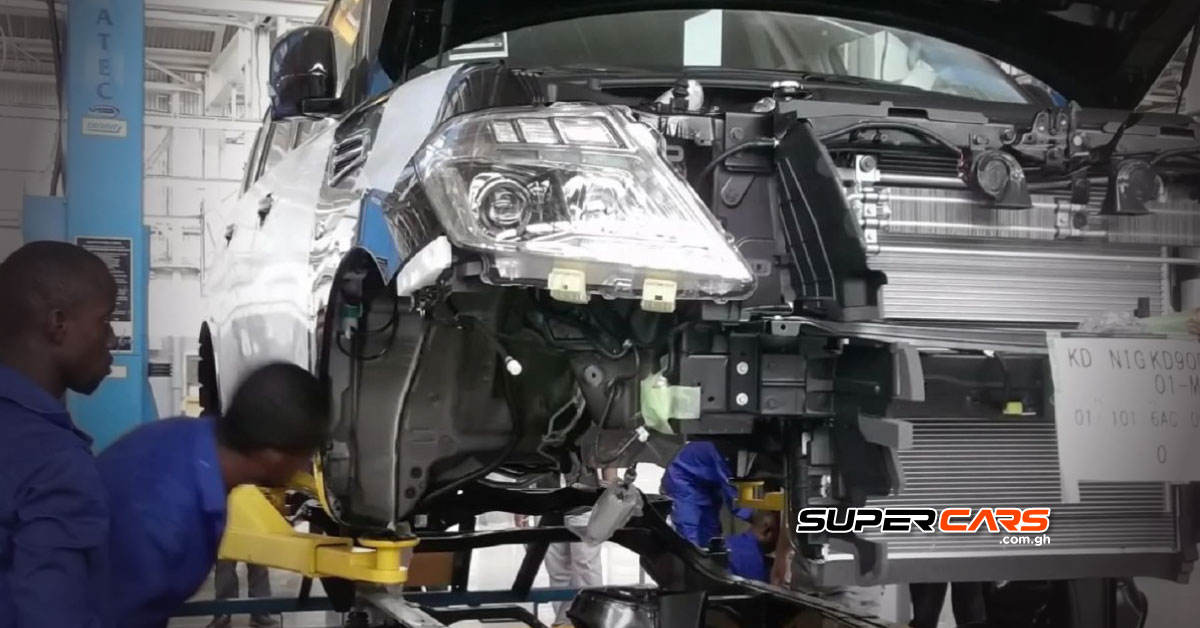
Ghana’s automotive development policy is a strategic plan to develop Ghana into a competitive and fully-integrated automotive hub across West Africa. By building an attractive framework to attract global Original Equipment Manufacturers (OEMs), the government hopes to curb its reliance on imported used cars and create jobs.
Terms of the Policy
As part of a 10-point plan for industrial growth, the auto policy will see Ghana assemble light commercial vehicles, SUVs, and passenger cars. The framework sets the ground for the future assembly of heavy-duty vehicles and full-blown car manufacturing plants across the country.
The Government of Ghana will build a regulatory framework to provide tax and import incentives to OEMs. Incentives include:
- 5-10 year corporate tax holidays;
- Exemption from import-related charges;
- Preferential procurement for government vehicles;
- Promote exports to ECOWAS and through the African Continental Free Trade Area (AfCFTA);
- Access to skilled labour through strategic alliances with educational centres.
Each supplier will receive an incentive package commensurate with how much local assembly takes place. To this end, Ghana has categorised car assembly into four main categories.
- Completely Knocked-Down (CKD): This is when all parts are imported into the country before assembly at the plant.
- Semi-Knocked Down (SKD): This is when some parts have already been put together before import.
- Enhanced SKD: This is an SKD but with more parts assembled in Ghana after import.
- Fully-Built Units (FBUs): This refers to vehicles that have been completely built before import.
Categorisation of assembly plants will depend on the government’s criteria. A CKD designation, for example, means suppliers import all parts before assembling in Ghana.
The government will also institute stringent measures to discourage importation of salvaged and overaged vehicles. Cars without destination certificates indicating their appropriateness will also come under scrutiny in the Ghanaian market.
How will the Automotive Development Policy Encourage Investment and Make Ghana an Automotive Hub?
- Tax holidays and other import incentives will make Ghana an attractive destination for international OEMs;
- Alliances with educational institutions and local artisanal repair shops will offer OEMs access to skilled personnel, further incentivising their relocation to Ghana;
- The integrated policy will attract suppliers and investment across the value chain;
- Financial and insurance firms will invest in asset-protection/buying schemes for buyers.
How Many Assembly Plants Do We Have in Ghana Now?
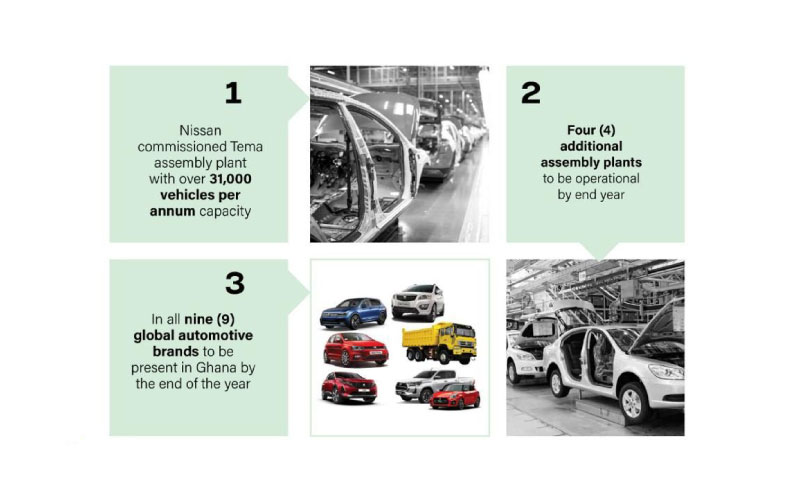
There are seven assembly plants in Ghana so far. They are:
- Nissan
- Suzuki
- Sinotruck
- Toyota
- Mahindra
- Volkswagen
- Kantanka
Besides Mahindra, Kantanka, and Sinotruck, the others became operational under the auto policy.
How Many Are Projected By Year-End?
By year-end, at least nine brands should have established plants in Ghana. Hyundai, Isuzu, and KIA have announced plans to build plants in the country so it looks like Ghana is on course to building an integrated auto hub in West Africa.
Is the Investment in the Auto Industry Worth it?
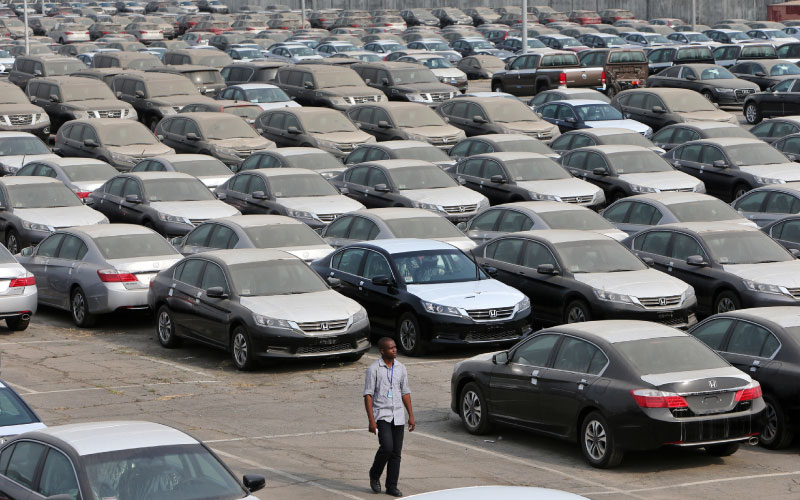
Ghana imports about 100,000 vehicles annually, the majority of which are second-hand. This shows a high demand for private and commercial automobiles. Establishing assembly plants will reduce dependence on foreign suppliers and provide Ghanaians with affordable new cars.
By curbing car imports, Ghana will save on foreign exchange. Once all assembly plants become operational, cars will be exported to neighbouring countries, further reducing the pressure on the Ghana Cedi.
Assembly plants will provide thousands of jobs to engineers and produce a highly skilled workforce. Since these vehicles are for the domestic market, the quality assessment will ensure they meet local safety standards. Vehicles that meet local regulatory and environmental standards will promote safety on our roads.
Check out Nissan’s largest assembly plant in Ghana, here.
SHARE
Recent Post
The Ghana Automotive Development PolicyApril 12, 2023
The Technologies & Performance of the Peugeot LandtrekApril 11, 2023
Are all Land Cruisers V8s?April 9, 2023
What Are Renewable Energy Cars?April 8, 2023
Have Any Question?
If you have a question, call or email us.
We will get back to you as soon as possible!
Categories
Videos
Texts
Guides
Grand Prix